Another week, another post where the blank page has been open for 24 hours and half an idea is floating around in my head as I try to pin it down.
I think it vaguely ties in with what I said a couple of weeks ago about how it's sometimes hard to judge where you are in a relationship (short-hand for an interaction with someone else - not exclusively 'romantic') and how it can impact on self-esteem despite best efforts.
As most things often do, it starts with music. Music is brilliant obviously - having that ability to conjure up a person, place or moment in time based on a few notes played in a certain order is something special. Part of the problem of course is that it works both ways - for every moment you want to remember, there's usually something you're trying to forget (and obviously they're always the songs that stick in your head). To steal from Jay-Z's Blueprint2 album title - it's a gift and a curse.
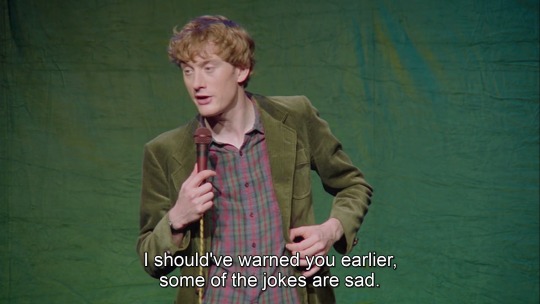
'Perfect Sound Whatever' by James Acaster is a great read about music and mental health
Of course the thing with music that makes it so brilliant is that the interpretation becomes personal to us. I can't ever understand what prompted Mike Skinner to write that song but I know that those 10 words - I think I love you more than you like me - have almost become a kind of shorthand for my perception of many of my relationships.
That's not to say it's actually true by any means of course, but that perception is sometimes difficult to disentangle yourself from. I'd been trying to think about why that is and I think it's down to certainty - or more specifically, a lack of it.
Most of the time I'm fairly clear about what I'm thinking, even if actually articulating it is somewhat difficult (*cough* case in point *cough*) but knowing what someone else is thinking or feeling is a lot less clear and is often where our old friends Worry and Anxiety pop round uninvited and put their feet up on the sofa.
Objectively there's nothing to worry about of course - those relationships you've had for years have stood for that long because they're built on solid foundations. Nothing to worry about right?
I love this one
"What if they didn't understand what I meant when....?"
"What if I upset them when...?"
"What if they're mad because...?"
"What if they don't want to be friends anymore...?"
I had my eyes opened at StressControl last year when I found out that not everybody thinks these things and worries about them like I do. If you're one of those people, then kudos to you - but it partly felt like my reality was being torn down and rebuilt. Again, objectively of course people don't all think like that because it makes very little logical sense. But it's hard to free yourself from that when it's been your perception for so long.
Under the old regime there were a few tried and tested options when those questions started floating around:
Seek any kind of constant reassurance (explicitly or implicitly) that the last thing I'd said hadn't been misinterpreted or that you'd not upset the status quo
Qualify what (I thought) I'd done wrong in a painstaking level of detail that would make War & Peace look like a short story
Assume I'm burdensome and a distraction that people would happily do without (not in that way - chill)
Shut down - don't make the effort because it can't or won't be reciprocated in the way I expect - better to not bother than show vulnerability
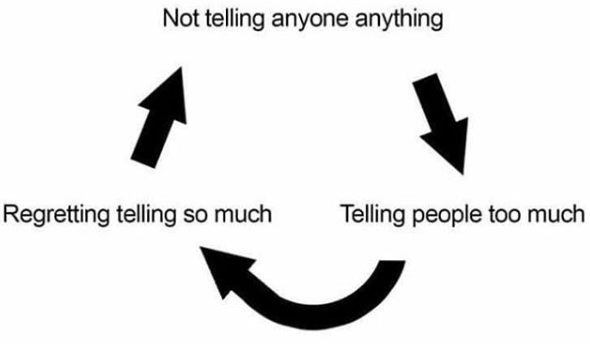
Point number 3
Point number 4
Sorry - a lot of relevant memes this week...
And so, via a slightly circuitous route, we come back to Mike Skinner and the woes he and I share - "I think I love you more than you like me". The last couple of points on that list above are the kinds of things I associate that line with - being at the extreme of one feeling while perceiving that everyone else is at the far end of another.
That perception genuinely feels hard to get over sometimes, though I've learned that often it's the arbitrary expectations that come with the perception that compound those difficulties. Relationships can't be quantified or measured - they're things we know, feel and trust in.
Worry and anxiety can make us question those things we know to be true, and have faith in and so, like with most things, it's the same few tricks that help us through. What would we tell a friend feeling that way? What is the likelihood that the thing we're obsessing over is actually happening? How do we make mental space to be able to evaluate what we're thinking and experiencing in a rational way? If in doubt, play the greatest hits right?
I envy the people that have that in-built way of just knowing this stuff is all OK without it being a large number of conscious thoughts. Maybe you're all sociopaths or something? Sorry - what I meant by that was..... please don't be mad at me.... are you upset....? Etc etc forever and ever...
(Oh - in diabetes news, I've had four consecutive days with bloods all under 10mmol so I guess I'm cured or something... - come for the sadness, stay for the diabetes)
I drew a blank yesterday when I sat down to write - there was something there but I couldn't quite see it. It vaguely came to me as I stared at the ceiling at something-past-midnight so let's go.
I should preface this by saying that it's Diabetes Week (8th to 14th June 2020) and so while this won't entirely depart from the mental well-being stuff I've talked about for the last three months, I was reflecting on my experiences specifically with diabetes more than usual last night.
I was trying to remember how old I was when I got got diagnosed with type 1 diabetes. I always start by telling myself it was the October of my graduate year at university as I remember it being a fairly isolating experience in many ways. But that's not true. The date I mean - it was isolating in a lot of ways. I remember trying to explain it all to a couple of my course-mates (and fellow 5-a-side colleagues) and how lower GI stuff like Shreddies would help. "Shreddies - keeps diabetes locked up til lunch" still makes me smile. But that must have been the start of my third year which was October 2001.
And that means next year will be 20 years with type 1 - half my life. After that point it'll be something that'll be the bigger part of my experiences, not the smaller part. Those 20 years without diabetes would always be a static thing, but soon that block of time will become a decreasing minority.
Memes for all occasions
Looking back at the start of this adventure I was woefully ill-placed to deal with it - not that there's ever really a good time to get diagnosed with a chronic condition but still... A few ridiculous things really stand out from those first few months. I remember being told to make sure I'd eaten before playing football at university so I'd cram all sorts in before a match and wonder why I was sky high afterwards. I started off on mixed insulin so there wasn't really a concept (that I'd be told about at least) of correction doses so I just lived with it.
When I switched to basal/bolus a year or so later, that felt like a little more freedom, but I was still walking around with way too little knowledge in my head. That's diabetes knowledge for those giggling at the back... While I finally had the tools to finesse my own self-management, I didn't have the understanding. One unit for 10g of carbs seemed to work, but I'm sure it took years for me to ask what would happen if I did insulin without food and finally understand if my levels were high I could just do insulin to fix it. Seems so obvious now, but it was alien to me for so long.
And (as I gratuitously wield my crowbar) it got me thinking about other paths I'd not taken because of things I didn't know or was scared of finding out. Opportunities I didn't take, places I didn't go, girls I didn't ask out, invitations I turned down... all because I was unsure of myself or scared.
I think what it made me realise (at nearly 1am...) is that the stress and anxiety that I've really only consciously started to be aware of has actually been around for a really long time. Looking back, some "coping" mechanisms have been fairly common over the years (however cringe-worthy they were and how hard they are to let go of), some of the anxiety symptoms probably date back over 25 years.
So I think there are a lot of things I wish I'd known. All the stuff I've accumulated over nearly 20 (TWENTY) years of living with diabetes would obviously have been hugely beneficial way back in 2001. But I've been struck again by how much the mental aspects have been so important. Not just in terms of missing out on lived experience, self-confidence or self-esteem, but that overlap with managing the physical bits.
I had a conversation with someone recently about how easy it feels now to instinctively know what my insulin doses should be, and that the textbook answers don't reflect what I intrinsically know to be true about my own care. But whilst that trial and error, and learning from those mistakes has been tough at times, it feels easy in comparison to understanding and managing things that aren't tangible or don't manifest themselves as physical problems to solve.
I don't know... it makes sense to me, and if you can relate too, that's good. Happy diabetes week. Until next time
Predictably I missed last Monday as it was a Bank Holiday and I had a week off. I missed posting yesterday because I wasn't sure I had the right words to be able to articulate what I wanted to say. I'm still not sure I do but let's see where this goes eh?
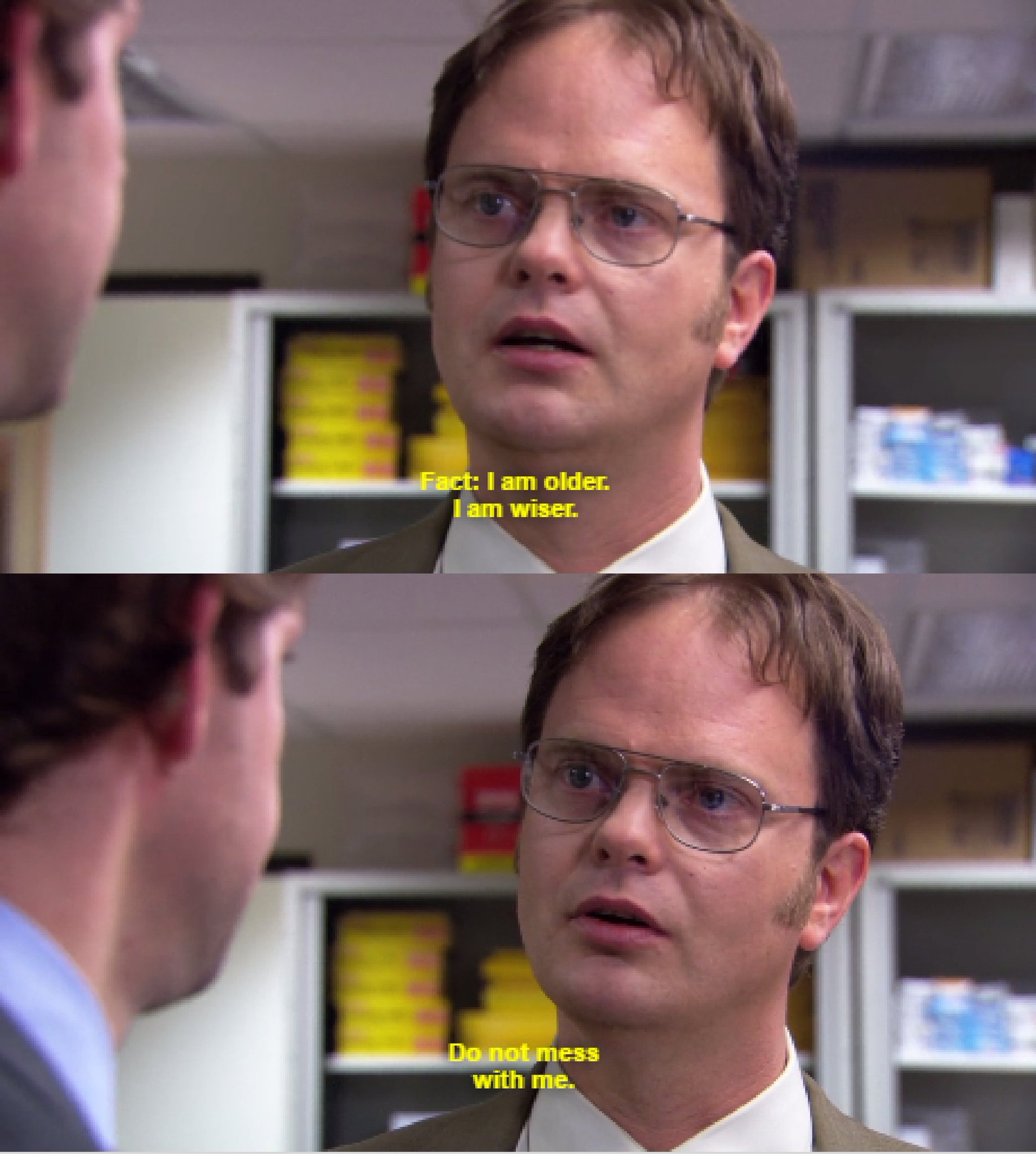
Since I last posed, I've edged a year closer to 40. Facebook memories see to suggest I'm forever bound to say "older but not wiser - haha" and that absolutely feels true in one sense, but maybe less so in another.
Over the last year, I think StressControl and CBT have taught me some sense of self-awareness that I wasn't really conscious of before. Whether I'm actually wise enough to be conscious of it in the moments I need to is a wholly different matter.
Absolutely I am Dwight
One of the main themes at StressControl was about how we often judge ourselves more harshly than we would others and are our own worst critic. At CBT we talked about how powerful meaningful relationships are and how they can make a really positive difference to how we feel. I guess that latter part at least is familiar to many people right now given that lockdown has many of us distanced from those people we rely on.
I think where I've often felt like I've struggled is in finding those relationships. I've got a catalogue of reasons why that's the case - you can leaf through that at your own leisure - but I think I large part of it is down to not being able to understand where the right balance (or equilibrium - get some mileage out of that economics degree) is.
But this is where the words dry up a little. I'm not sure how to get that final point down:
a) without coming across with an inflated sense of self-importance
b) succinctly or
c) in any kind of way which actually gets to the heart of what I'm trying to say
I guess the point is that I often feel like I mis-judge what those friend/relationships should look like or what the dynamic is. Pushing way too hard when there's no need, cutting myself off entirely because it's easier than working through what the middle ground should look like or just driving myself crazy with self-doubt, worry and anxiety. Where this was bad before, lockdown has made it a lot worse.
Imbalance
I've thought about referring myself back to IAPT but I'm still not sure I'm clear on the thing that would be most helpful so I'm keeping that in my back pocket for now. I've thought about seeing a GP though that's kind of a nuclear option I'd rather not take. And there's no way I'm going near a surgery right now in any case.
I think I've got most of the tools and knowledge to be able to make this better (there's the wisdom) but it's still difficult to take that mental step back and use them objectively. That bit is really hard, and the nagging self-doubt that asks whether I am good enough makes it tougher.
It's ridiculous when you see it like this - but seeing it like this is the tough part
As this blog becomes progressively about mental health and less about diabetes, I probably need to grab food so I don't have a hypo in a meeting later on.
I've definitely been trying to focus on One Nice Thing over the last week and it's kinda helped to some degree. I had a few photos printed up as part of an early... *ahem*'th birthday present and they looked exactly as I'd hoped. It'll be nice to have those memories on show if I get round to hanging them within the next five years.
Dubrovnik from the city walls
A view of Ambleside in the Lake District
I'm also squarely looking forward to a week off at the end of this week and spending some time not thinking about email and Zoom. If the weather holds, we've cracked it.
I also managed to have a diabetes clinic appointment over the phone which was a lot less stressful than trying to find somewhere to park at the hospital and be staring at the walls of the waiting room forever. Nothing too major to report - still work to do to stave off more hypoglycaemia episodes but as I've said in one of these blogs before - I feel like I'm taking the rough with the smooth when it comes to diabetes right now.
My consultant talked about pump upgrades again and is desperate for me to switch to the Tandem t slim pump and basically set myself up with a closed loop system of sorts that would probably reduce the number of lows. I'd have to give up my funded Libre and then totally self-fund a Dexcom G6 (for about £2500 a year). I'm going to take some time to think about it properly - it's a lot of money, but potentially a big difference in quality of life. If you're using it all together and have any insight, I'd love to hear about it.
This flip side of this week's coin is just the relentlessness of everything. Obviously this situation is tough for everyone in different ways. I know I've felt it mentally - some days more than others and some weeks more than others as well.
A calendar image that lined up to today's date (if not day) was a happy coincidence
Having something to aim for makes a big difference and I think that's what I certainly feel is lacking. Most of the time I don't feel too put out by the restrictions - in fact I think it's lead to some positive changes overall that I really want to hold on to.
But there are times when being locked in that cycle of shower, eight hours of video calls, cook dinner, load/unload the dishwasher, TV, bed feels a bit like Dr Strange battling Dormammu in the time loop (yes we've watched all the MCU films).
There are definitely days where I question the futility of that - if all I'm working towards is more of the same, then is there any point in that effort? Not in a harmful way I should probably add. I've always tried to put as much of myself as possible into what I do and I don't feel like I want to pull back from that necessarily, but it's taking a toll right now.
I think the trick here again is to focus on the short term 'ends' and the compress the horizon for everything. It's all an adjustment for everyone and knowing that I don't always handle the internal aspects of things like this particularly well, I should be more conscious of how I approach it.
Bank holiday next Monday so will inevitably forget to post.
At least I think it's week eight... I know lockdown officially began on March 23rd but I'd definitely been working at home for about a week and a half before that.
Some of the days do have that sense about them and at times it definitely feels like they're merging into an amorphous blob of stuff. Some days fly by and then others seem to draw themselves out forever. A three-day weekend definitely helped me reset to a large degree but there's something about this situation that's exhausting. A couple of days with no alarm and no real need to do very much or even get beyond the garden feel like they've wiped me out. I'm fairly sure it's down to the mental effort we're expending trying to keep on an even keel.
Most of this last week's diabetes problems have been about keeping out of the red and in the black which I will admit has felt a little relentless at times. After some extensive research over the last few days, I think I'm close to publishing a paper confirming that bourbon biscuits have little to no effect on blood sugar whatsoever. I am also implying that they therefore have no calories either... It'll pass as it always does, but feeling like you're constantly scouring the kitchen cupboards for something to eat can be another layer on top of everything else you're trying to think about.
A couple of things sprang to mind this week. Firstly that it's felt harder at times to maintain that 'deep breath, think before you speak' approach to communicating, whether that's at home or at work. I think the current climate (sick of writing that) and how far we are into this way of living gets to us all at some point, and it's almost inevitable that some part of us will snap, however briefly. It's also easy to have our head down thinking about our own situation, when the reality of it is that everyone has their own version of that too. I'd like to think I've been generally conscious of that - what feels like 40 hours of video calls a week means you can't help but understand people's circumstances, but it's no bad thing to be more explicit about it in my thinking.
The other thing is really to think of One Nice Thing about the day and try and hold on to it. After StressControl I tried to write three positive things down from each day before I went to bed as a reminder that the stress and anxiety was always balanced out by other things. I've lowered the bar a fair bit for the time being, but hoping it continues to make some small difference.
After a couple of glorious days, the weather turned yesterday so we had some ultimate comfort food in meat and potato pie
This was the sunset on Thursday after my dad got taken to hospital (and thankfully discharged with antibiotics about 8 hours later)
Managed to order some Lego that's usually only available from one shop at Legoland in Denmark - they've made it available online due to COVID
It's still a massive set of ups and downs and it's the same for everyone I talk to as well. In some sense, it's hard to take comfort from the fact that everyone is on this relentless roller coaster, but at the same time it's kinda reassuring that everyone can almost certainly relate to how you're feeling at any given moment, even if it remains largely unsaid.
On their debut album 'Love, And Other Catastrophes" the aptly named Skint & Demoralised sang about major highs, manic lows and that's a little what this last week has felt like.
When it's been good, it's been really good. When it's been bad, well... it's been bad.
Having diabetes has felt like a lot more of a job this last week as you'll see below. Yesterday in particular ended up with me curled up, asleep on the sofa at about 3pm with a nice hypo headache.
I talked about distractions last week and that's still the name of the game right now. A combination of things mean that I worked til 9:30pm - 10pm three days running (having stopped for dinner and half a film). Normally I'd be cursing even the need to work after about 6pm, let alone actually doing it, but it felt strangely calm - almost relaxing - to have something to keep my find focused. It also had the benefit of making me feel almost productive at some point too.
I talked a bit about managing the voices/thoughts last week too and that's still been very challenging at times, particularly when trying to switch off at night. I'd taken to kind of half going to bed, but staying up til gone midnight some nights over the last few weeks just so I could exhaust myself. The problem with that is that it's a great short-term fix but long term you end up asleep on the sofa on a Sunday afternoon.
And I think that's almost been a lot of lockdown in a nutshell - some of the short term difficulties can be managed, but I'm not sure I've figured out how to do it in a sustainable way that doesn't just create a different problem to solve another time.
Worth mentioning a few of the highlights as well just to remember the highs as well as the lows:
Made Australian Crunch over the weekend - proper throwback to school dinner desserts and one of the best chocolate things going (Galaxy milk choc on top for best effect)
Bought a new Xbox and played a lot of Lego Marvel Superheroes with Violet
Managed to run 10km (with Violet on her bike) on Sunday - first time over that distance in a year, and awarded myself this medal from a virtual race
Finally, I know I've been really lucky to be able to call on a couple of close friends who have helped me be objective and rational (for me at least) and taken the edge of some of those manic times. I won't name names, but if you're reading this and it sounds like you, it probably is. Thanks.
I guess the message is the same. It's hard sometimes, and lockdown life makes it harder to manage and to escape. One of Violet's favourite quotes is this from John Lennon. I find it hard to believe in it sometimes and it almost feels a little but trite, but to hear a 10 year old say it every so often does give you some hope
It's felt a little.... more straightforward this week. I'm loathe to say 'easier' because it's felt a little like peaks and troughs over the last few days. A relatively quieter week at work has helped so that's something.
So far the sun's kept shining which I think is definitely a positive to cling on to. I think a few days of rain (which looks forecast for this week) will make for a somewhat less manageable lockdown experience.
I've also tried to make a very conscious effort to look for distractions or hobbies to give me some focus. Certainly something beyond staring at some game on my phone at least.
I've got round to listening to a podcast that I never thought I'd find time for. It's called Office Ladies and is an episode-by-episode behind the scenes rewatch of The Office - An American Workplace (scientifically the best TV comedy of all time). At about an hour an episode it's a good start to a weekend morning and means I'm learning some new stuff about a show I could practically quote. It also ties in nicely with my inspired decision to start and rewatch the whole thing from the beginning too.
The last few weeks I've got more and more into my newest middle-class hobby which is rock painting! It all started when we found a couple on the ground near where we live while we were on our daily walk and spiraled quite quickly from there. Historically I've never been someone you'd associate the words "artistic" or "patient" with but I'm certainly learning to harness the latter. I've found it helps me stay calm and feel focused, and there's a bonus that it's a good family activity for us all.
This weekend's efforts
We've also reached that stage where we've had a family quiz over Zoom. A top score of 9/20 suggests we all need to reset our expectations of what 'easy' is.
Of course it's not all sunshine and plain sailing, but I'm definitely at the stage where I know that's not going to be the norm, even if I'm a little way of mastering how to cope with it.
I think one of the hardest things I've found over the last week (and feels like something that's been a fairly constant background for me for a while) is finding it hard to stop myself following a thought to some fantastical and unlikely resolution.
It's hard to really describe what that's like without using examples I'd rather not share here, but it often comes down to something jumping into my head and staying there while I simultaneously try to forget about it entirely and completely fixate on it in the worst possible ways.
I found these resources from Mind which helped a little, and resonated well with some of the learning from StressControl last year. I'm not convinced I'm 'hearing voices' and I don't think it necessarily strays into intrusive thoughts per se, and certainly not harmful intrusive thoughts. It's more that I find it hard to not fixate on something once I start.
And so that's where distractions come in. For me, right now it's a balance between distracting myself with new things that I'm enjoying and also learning to manage and try to de-escalate the stress and anxiety when distraction doesn't work. It's a learning curve that feels a little steeper because of the situation we find ourselves in right now, and ultimately I think it comes down to celebrating the good days and stopping the bad days from bringing you too far down.
I skipped last week. Partly because it was Easter Monday and partly because it was the first lie in past 9am I'd had in years and I let the day get away from me a little.
I think it's fair to say my general wellbeing has deteriorated over the last couple of weeks - I'd forgotten how easy it is to let everything get out of control if you don't keep at least one eye on it. At times like these it feels much harder to be conscious of it because it isn't one single thing - it's everything that you need to be mindful of. As my friend Taylor would say, it's kinda like death by a thousand cuts.
So work has definitely felt tough - we've got a big opportunity to make significant change right now in the wake of coronavirus and that's genuinely exciting. It's also genuinely exhausting and the lack of variety that a constant stream of teleconferences presents is really challenging.
I also find it hard to learn from my past experiences... just because 18 meetings in two days is possible on paper, doesn't mean it's a good idea. One of my learnings for all of life is to feel OK saying 'no' to people. It's definitely hard when you need to do things at pace, but I know I can't work at that level relentlessly so something will have to change.
Whilst diabetes and me haven't ever been best friends, the last couple of weeks have tested our relationship a little more than usual. You'd think being at home would allow you to control for all those external factors like early starts and dashing for trains, but my levels have been on as much of a roller coaster as my mental health, and of course there's an intrinsic link between the two.
Being cooped up has definitely reached that point where I've felt a bit cabin feverish. This is the bit I'm maybe most frustrated about because it felt inevitable that this would take it's toll and I feel like I've idly watched it creep up and then run right past me and now I'm playing catch up.
I'm sure I'm not alone in realising how much difference my weekly routine makes to my general positivity. Catching up with friends at Hillsborough, bacon butty from the cafe once a week, seeing people at ballet while Violet dances.... even the freedom that walking round ASDA gave me feels hugely important right now and I'm starting to miss it a lot.
I've been out every day and that's definitely a highlight and I'll keep doing it even in the pouring rain. I've got back into cooking and baking with Violet in a fairly big way (despite feeling a little ashamed that it's taken a Hello Fresh delivery to remind me how much I love cooking). I've also found a new family friendly middle class hobby in rock painting. I'm definitely not the most creative or artistic person on the planet (or in my family...) but it's calming so I'll persist with it. The meditation and breathing exercises I've got make a big difference too. If you're after an introduction to those, Headspace are offering some free resources at the moment.
Keeping up with this blog and writing stuff down for myself is helping too. I think it's about working out what sensible support mechanisms I can put in place for myself and my own sanity while this is all going on. And remembering that I find some bits harder than others. I still haven't found a way to talk kindly to myself, even after StressControl and CBT. I'm better at calming myself sometimes, but this is the hardest part for me by some stretch so it just means I'll have to keep working at it and celebrate the small victories.
If you made it this far I hope you're staying safe and staying well. The pic above is definitely tongue in cheek, but remember it's a marathon, not a sprint.
I mentioned on social media recently that finding my love for music had been a really positive step for me as part of Stress Control and CBT over the last 9 months or so. The posts preceding this give you a sense of those courses were like.
I came across this playlist challenge at probably just the right moment. It's not something I'd normally ever entertain but I found it really helpful to focus on. It was a way back into things I'd not listened to in a long time and some of the memories that went along with particular songs or albums. Getting down to 30 songs was tough, but I just kept reminding myself that these aren't my favourite 30 songs, or the 'best' - they're just things that speak to me when I look at each topic.
I put the list together as a whole over about four or five weeks and shuffled a few songs around a couple of categories before it was finished. Weirdly I somehow decided that it was enough to have a list in a spreadsheet and didn't think to listen to it until yesterday (a good few months after I'd finished it).
What follows are my answers, a YouTube link and some explanation as to why I chose that song where I can give it. Again, not the best 30 songs in the world, or even my 30 favourite - just ones that work well. And listening to the list as a whole was, for me, a hugely positive experience. If you have an Amazon Music subscription, you can listen to the whole lot in just 2 hours and 6 minutes here
If you're inspired to have a go, drop me a line on twitter.com as I'm always on the look out for something new.
1. A song with a colour in the title - Little Red Corvette by Prince
There's a few that sprung to mind here - ELO's Mr Blue Sky, Donovan's Mellow Yellow, Eiffel 65's Blue... but I remember hearing this, and more of Prince's music and it's always stuck with me. Purple Rain was another contender but I went with pop to kick off
2. A song with a number in the title - Four Out Of Five by Arctic Monkeys
I will basically fight anyone who says that Alex Turner isn't one of (if not the) greatest lyricists of this generation. A song about a taco stand on the moon called The Information Action Ratio sounds ludicrous but I love it and it was the stand out track on Tranquility Base Hotel and Casino which I listened to non-stop for weeks
3. A song that reminds you of summertime - Plage by Crystal Fighters
I've listened to hardly anything by this group, and I'd not heard this track in years but it immediately sprang to mind. Light, airy and talking about going off down the beach. Summer innit?
4. A song that reminds you of someone you'd rather forget - Don't You Find by Jamie T
The entire song as about remembering people you shouldn't or would rather not and invariably I can't listen to it without mentally ticking off some of those names. Jamie T's entire discography is excellent so would recommend if he's new to you
5. A song that needs to be played loud - I Bet That You Look Good On The Dancefloor by Arctic Monkeys
Yes it's their second track in the first five. Yes they'll appear again. There's no rules and you're not the boss of me... I remember hearing this on a demo CD before their first album came out and being blown away by it. I think history shows that it was a focal point for British music as well. I wore out the album CD I played it that much. I've also seen this live and shouted along with thousands of others. Spine tingling.
6. A song that makes you want to dance - Dancing Queen by ABBA
Potentially a cop-out choice on the face of it, but for me Dancing Queen is associated with two very strong memories. Firstly being the only album we listened to for a week on our A Level German exchange trip and secondly (and more recently) as the finale number for my daughter's ballet school summer performances. It makes me want to dance because it's the only routine I ever know and I sometimes get the chance to embarrass her at class by dancing along.
7. A song to drive to - Bright Lit Blue Skies by Ariel Pink's Haunted Graffiti
I'm not sure what to say about Ariel Pink other than he has a lot of interesting and varied music and you should give some of it a listen. This is from his 2010 Before Today album and for me is perfect to have on for a summer evening drive.
8. A song about drugs or alcohol - Blinded By The Lights by The Streets
As a tee-totaller it was hard to find something to personally relate to here. I considered Blur's Coffee & TV as a compromise, but this from The Streets is almost certainly a more appropriate pills and clubs example
9. A song that makes you happy - My Delirium by Ladyhawke
I can't remember how I first heard this, but it's always stuck with me as an upbeat pop number that I have to sing along to. I saw her at the Leadmill in Sheffield too and getting to hear this live was pretty special
10. A song that makes you sad - Five Bottles Of Shampoo by The King Blues
The message in this is a positive and affirming one, but I think as a husband and father, it's still appalling that 'don't be a prick to women' is a still a message that anyone should be talking about. The King Blues are the only punk outfit I've seen live (Fibbers in York) and would urge you to listen to their whole 'Punk & Poetry' album if you're feeling even moderately rebellious
11. A song you never get tired of - One Day Like This by Elbow
I could basically listen to this on repeat for a week. It's beautiful and passionate and just generally perfect. It was also used as the music for a video summary of my daughter's first ever dance show and a couple of years ago the senior girls did a ballet routine to it as well. Lots of wonderful memories associated with a perfect song
12. A song from your pre-teen years - The Sign by Ace of Base
My pre-teen years go up to the early 1990s so there's a wealth of stuff to choose from for this and narrowing it down was nigh on impossible. That said, I can't listen to this without beaming and I think anyone would objectively say it's amazing.
13. A song from the 70s - You're So Vain by Carly Simon
Again - how do you pick one song from an entire decade without having some kind of remorse? Loads of artists fell away here because I just love this song - no grander, but also no better reason
14. A song you'd love to be played at your wedding - Nobody Does It Better by Carly Simon
It felt wrong (and dangerous) to pick anything other than the song we had for our first dance when we got married
15. A song that's a cover by another artist - Hallelujah by Jeff Buckley
I'm unashamedly a snob when it comes to cover versions and so this was a fairly small pool to choose from, with Valerie by Amy Winehouse being the other consideration. Buckley's version of this is haunting and powerful and the definitive version for a lot of people
16. A song that's a classic favourite - Don't Stop Me Now by Queen
I'm yet to meet anyone who won't try and sing this at the top of their voice and if that's not the definition of a classic favourite, I don't know what is
17. A song you'd sing a duet with someone on karaoke - Where The Wild Roses Grow by Nick Cave and Kylie Minogue
There's a reasonable argument to be made here that I might find someone to do Kylie's part, but this is a wonderful duet and that in itself was a deciding factor in it making the list. Nick Cave is another one of those people who's lyrics I could listen to forever and he'll pop up again shortly.
18. A song from the year you were born - Start Me Up by The Rolling Stones
Another one where there were a number of contenders (sorry Duran Duran) but I think you can't argue with some classic pop rock that's a toe-tapper
19. A song that makes you think about life - Europe is Lost by Kate Tempest
Obviously none of us can remember a time before Brexit and I think Kate Tempest encapsulated that feeling in this track. Her work in general is clever and astounding. It's hard to pull out individual songs from albums that are essentially complete pieces in themselves, but this is exceptional
20. A song that has many meanings to you - Everything That You've Come To Expect by The Last Shadow Puppets
There's so much odd fantasy in this that I'd almost struggle to give you one thing it means to me. It takes me back to seeing them at Sheffield City Hall, it's a song I play to calm my anxiety when I have bloods drawn and it partly makes me cast my mind back to different people from my past. The bilabial plosives of "dirtbag ballet by the bins down the alley" are also incredibly pleasing
21. A song with a person's name in the title - Stagger Lee by Nick Cave and the Bad Seeds
Loads to choose from here, but this made the list for two reasons. Firstly Nick Cave's ability to tell murderous stories like this is unparalleled and secondly Stagger Lee itself is such an interesting song. A folk song first recorded in 1923 and then retold in different ways by different artists over the years.
22. A song that moves you on - 99 Problems by Jay Z
Jay narrowly beat out Britney's 'Toxic' here which was the first song on my running playlist for years. I'm a big fan of his early stuff on The Black Album as well as Magna Carter and 4:44. I saw 99 Problems live as part of the Watch The Throne tour in Manchester and it was incredible.
23. A song you think everyone should listen to - People's Faces by Kate Tempest
Again, Kate Tempest's ability to tell a story and really see people comes through on this one for me. I think it sparks something different inside all of us and is underpinned by a hypnotic hook. Don't read my words, listen instead
24. A song by a band you wish were still together - Something by The Beatles
Picking a single Beatles track is hard enough but I've always loved Harrison's simple love song. This was another one from our wedding and something I used to sing to Violet when she was born.
25. A song by an artist no longer living - Love Will Tear Us Apart by Joy Division
Ian Curtis died before I was born so I think that qualifies Joy Division for this one. The first 30 seconds of this song alone are enough.
26. A song that makes you want to fall in love - One Hundred and Thirteen by Middleman
Most of us have probably been head over heels in love at some point in our lives, but I don't think anyone has ever managed to put down in words the beauty that we see in someone else the way that this song does. It's spoken-word over gorgeous music and if this doesn't make you want to fall in love then nothing will
27. A song that breaks your heart - Sometime Around Midnight by The Airborne Toxic Event
This is just pure artistry. A song built on layers, from orchestral music, to soft lyrics, to guitars to an impassioned plea for an unrequited love. It builds to a crescendo and really evokes that feeling of unrequited love and wanting someone when it's never meant to be
28. A song by an artist who's voice you love - Not Mine To Love by Slow Club
Rebecca Taylor's voice is almost certainly the most incredible I've ever heard live. Powerful, emotional and haunting it's criminal that Slow Club weren't more widely successful before the broke up after the release of 2016's One Day All Of This Won't Matter Any More. Rebecca's work as Self Esteem is equally superb in the pop genre but this song (taken from the album Complete Surrender which you should also listen to) feels like she's looking into my soul
29. A song you remember from your childhood - Karma Chameleon by Culture Club
Six fairly emotionally hard hitting and powerful songs are brought to an end with the first song I ever remember. It's easy to almost dismiss it as 'classic 80s' but there's a lot more to it than that
30. A song that reminds you of yourself - Mardy Bum by Arctic Monkeys
Hearing someone being called mardy is one of those things that always reminds me of home. Those things we take for granted about our city that others don't understand mean more to us as we get older. I remember my mum and dad calling me mardy when I was a kid, and I'm still prone to being a mardy arse now. This was my ringtone for years and I can't think of anything better to describe myself
And that's that. Hopefully you're telling yourself you can do better because these are just those that mean something to me. Your memories and attachments are different, but if you do make your own list, hopefully it's as enjoyable for you as it was for me.
If you want to catch up you can find the pre-session, week one("What is Stress?"), week two("Controlling Your Body"), week three("Controlling Your Mind"),week four("Controlling Your Thoughts") andweek five("Panic and Sleeping Well")posts in the links
And so StressControl comes to an end. The title is from one of the slides in this session, but there was an open understanding that it's something easier said than done. We followed a broadly similar approach as previous weeks, this time looking at our personal wellbeing and then covering a quick summary of the previous five weeks. I'm going to talk a bit about wellbeing here as well as covering some of the things I've noticed or that have changed since I started, as well as what some next steps might be.
Wellbeing
In week one, we covered the idea that stress is a continuum with high levels of stress at one end, and low levels at the other. This is a distinction worth making because it's not the goal to eradicate stress entirely, but to try and put ourselves towards the lower end of this particular spectrum. If we think about stress as this horizontal line, wellbeing can be thought of as a similar, vertical continuum with poor wellbeing at the bottom and good wellbeing at the top.
The World Health Organisation talks about these two extremes as 'languishing' and 'flourishing' and of course, the idea is to move ourselves towards the flourishing end more often than not, whilst also increasing our ability to manage our stress. As with anything worth knowing, overlaying these two concepts gives you a handy 2x2 matrix:
Recreated on my phone so more simplistic than it should be, but you get the idea...
Obviously we want to be in the top left as often as possible and in the bottom right as scarcely as possible, and because we're people, we'll often move around all four of these. Some high level stats suggest that for every 10 people, three are langishing, five are middling and two are flourising and the tools we have at our disposal are aimed at keeping us away from the languishing end of the spectrum as often as possible.
We talked about what sort of things you could do to try and improve your own wellbeing, and with my work hat on for the briefest of moments, I was pleased to see that volunteering your time was something that was encouraged. Being able to contribute to the wider world around us increases our own personal wellbeing too. Listening to music, being more physically active, getting more fresh air and practicing mindfulness were all suggested too. Learning something new or picking up an old hobby came up too and the idea is that our brains value the sense of accomplishment that comes with learning or completing something.
Mindfulness is something we hear more and more of but it was interesting to hear the definition they gave, which was really about focusing on the moment we're in without letting ourselves worry about the future or brood about the past. It sounds fairly simple when you hear it like that, but trying to let your mind focus purely on what our sense are experiencing right here and right now can be hard. I think autumn is a good time to try more of that as the leaves change colour, the air gets a little cooler and the familiar scent of fireworks starts to fill the air. It's definitely something that needs practice, but along with some of the breathing exercises we covered, I think it can be really helpful.
We also talked about the fact that we almost certainly talk to ourselves much more harshly than we would do to anyone else who may be going through something similar. We're often our own worst critic, telling ourselves that something should be easy to do, or that worrying or feeling down is something we can just snap out of, when we'd take a kinder and more gentle approach to friends or family or came to use with the same feelings. I think we all probably recognise that, and it's useful to think about what our compassionate self would say to our stressed self.
The final thing we covered was something I've heard of before but am yet to try and it's the idea of finding three things to be grateful or thankful for each day. I suppose the idea behind it is that we're allowing ourselves to think about the positive things we've experienced rather than having that feeling that there's nothing good going on. I'll see where I get to...
We finished the course with a quick tour back through the other five sessions but I won't repeat those here - links at the top of this post if you want to check out anything particular
What's changed?
So what have the last six weeks meant practically? Well six weeks isn't really a long time so some of the changes or differences are in their infancy and as they said, it's almost like the hard work starts now when putting these things into practice every day away from the course.
I'll start with the positives:
I've definitely used my rational voice more when I'm approaching known stressful situations (e.g. travelling). I now need to think about being able to have that midset when more unexpected areas of stress arise.
I've cut out more caffeine later in the day. This is pretty difficult sometimes as my work schedule can be a little unpredictable but overall it's an improvement.
I've followed some of the progressive muscle relaxation and breathing techniques fairly regularly and I think the breathing in particular has been really helpful.
I've started blogging again - admittedly only about this course, but it's got me back into something I enjoy when I feel like there's something worth writing down
I've started listening to a bit more music and watching a little less Netflix. Music has been a longstanding passion of mine but it had become a smaller part of my day and redressing that has been good
I've done more to cut out eating/snacking to try and cope with feeling tired or stressed. Early days but it's a step in the right direction
I've gradually started doing a little more exercise. It's not quite as regular or frequent as I'd like, but definitely feels like a positive step
I've only had one tension headache in about two months - that's definitely worth celebrating!
And a couple of things that aren't as good:
I'm a lot more conscious that sometimes I just find myself clenching my jaw and I'm not sure how often it's been going on, but it needs to be very deliberate recognition of it before I stop
I'm a lot more conscious of a pain or ache in my neck. I can't work out if it means my pillow isn't quite right, or whether it's just holding tension in that part of my body
I'm equally more conscious of the pain I get in my hip/leg that came before, during and after the London Marathon in April so I think I need to dig out the foam roller again for that
I still feel knackered all the time
So what next?
We did a wellbeing questionnaire in weeks one, four and six and whilst my score in the stress half of it decreased (10 to 9 to 8), the low mood half remained fairly static (14 to 13 to 14) and I guess that's something to think about. A lot of the symptoms associated with stress also correlate to the idea of low mood and whilst that might make the stress part of the diagram more manageable, it means you end up being fairly static on the wellbeing axis.
One of the facilitators suggested I ring up the IAPT wellbeing number and book in for some one-to-one discussion about disentangling the stress and anxiety from the low mood. That feels like a pretty big step. Part of me thinks that it should be easier having done this course - remember it took six months for me to ring up to book onto this in the first place. Having taken the first couple of steps it should be easier to take the next few. But it also feels hard to put yourself in a vulnerable place to talk about something you probably don't really understand yourself.
I'm going to keep plugging away with the techniques we learned on the course, and keep reinforcing the positive things I've started as best I can. Progress isn't perfectly linear in things like this and it's OK to have the occasional step backwards as long as you're taking a couple forward too. And I'm probably going to make that call...
If you made it this far (both on this post and throughout the course) then I hope it's been helpful in some way. Everyone's experiences and circumstances are different so use what you can and discard the rest. Hopefully I'll keep coming back to the keyboard more often than not - the focus can be quite cathartic sometimes.
Diabetes UK are running a hugely important campaign about improving the provision of and access to a variety of emotional support services. People with diabetes are twice as likely to suffer from burnout or difficulties with their own mental health compared to those without the condition. Some estimates suggest that one in ten people with diabetes are clinically depressed. You can read more about the vital It's Missing campaign by following the link. My story is just my story. If you need to talk to someone about how diabetes is making you feel, you can ring the Diabetes UK Helpline on 0345 123 2399 or you can ring Samaritans 24 hours a day on 116 123
Welcome to week five - dealing with panic and getting a better night's sleep. Instead of covering these with the usual 'theory/practice' approach, I'm going to talk about them as two separate topics as that's really how we went through them in the session. We were down to 10 (plus three people observing) yesterday which is a far cry from our 20 we started with, and I was a little surprised as I'd expected sleep to be a big draw. One of the facilitators actually said that many people book onto StressControl explicitly for the sleep info as it's something that a lot of people want to know more about. But first - panic:
Panic
We talked about what panic is and how those extreme feelings linked to fight or flight can, in some circumstances make us feel like we're dying. A lot of the symptoms of panic are (unsurpisingly) similar to those of stress or anxiety - sweating, dizziness, heart palpatations, clammy hands, shortness of breath etc... Some regular readers may also notice that these are also symptoms some people experience when having a hypo (happy Hypo Awareness Week by the way...) so understanding the cause is really important.
We also talked about panic can be a response to a particular situation (confined spaces and having bloods taken from my arm), or can also be 'out of the blue' panic. If you've never had a panic attack, it's not something I'd recommend.
In terms of management, a lot of techniques we've covered over the last few weeks came in to play. Focusing on breathing is key as it helps us regulate our internal biology. We talked quite a bit about hyperventilating and how this adds to feelings of panic as you're upsetting the oxygen/carbon dioxide balance whichcan fuel some of the symptoms. It's not something I have a lot of personal experience with though.
Aside from breathing, remembering to engage our rational voice helps - you might feel like you're going to faint, but if you never have, is that a likely outcome or is the fear fuelling the problem? We didn't cover avoidance in relation to panic so based on my own experience, I can tell you I actively do avoid situations that involve confined spaces where I can. I can't avoid blood taking though so it was reassuring that my own personal brand of coping (deep breaths, play some music, focus on something else) is largely in line with proper advice. I think it's helpful to add in the rational thinking bit too though (although I very nearly did genuinely faint once...)
Sleep
It did feel like sleep was the thing with the biggest build up, so it may be disappointing to here how it was nearly all grounded in the most mundane, common sense approach imaginable. As with most things throughout the course, it's reassuring that there's nothing too complicated to learn that's brand new, but also makes you wonder why you can't always see the easy common sense stuff for yourself.
We covered difficulty getting to sleep as well as difficulty staying asleep - I guess the difference between quantity and quality of sleep. Very few silver bullets here, but some of the things worth remembering are:
Avoid caffeine before bed (and bear in mind it can stay in your system for up to eight hours)
Reduce hot drinks closer to bed time (although the benefits of an Ovaltine are the exception there)
Alcohol might help you get to sleep but it can affect the quality of your sleep and you shouldn't end up being dependent on it
Eating a big meal before bed means your body will be digesting if after you've gone to sleep which again can affect the quality of sleep you get
Cool (but not cold) temperature is best - around 18 degrees. I felt particularly vindicated by this point as I'm a fan of sleeping with the window open
Reduce noise and light where you can (ear plugs, blackout blinds) but playing white noise can reduce the affects of environmental noise
Reduce screen time before bed (even where there are blue light filters)
Keep your bedroom for sleeping and not working, emails etc
We also covered how even small changes can have an impact so if you're struggling with sleep then some of these may be for you.
I think what I found frustrating here was the X factor that diabetes can chuck into the mix. I didn't have a decaf coffee after about 5pm yesterday, cooled the spare room (early start means I get the spare room) and had ambient noise that I know helps me get to sleep. And then I had a hypo at 2am and was up for about 40 mins before getting up at 4:40am...
I guess you can only control what you can control, but the impact that diabetes can have on sleep is catastrophic sometimes. I also know that weeks like this where I'll be sleeping in four different beds in seven days means I'll struggle.
So we're nearly at the end - next week is the final week of the course where we'll link all these bits together in an attempt to have a more concrete plan about improving our wellbeing and thinking about how we continue the work after the course has finished. All the hard work is still to come I think as it's the ability to stay focused on these techniques away from a weekly structure.
Hopefully this has been helpful - see you next week.
Diabetes UK are running a hugely important campaign about improving the provision of and access to a variety of emotional support services. People with diabetes are twice as likely to suffer from burnout or difficulties with their own mental health compared to those without the condition. Some estimates suggest that one in ten people with diabetes are clinically depressed. You can read more about the vital It's Missing campaign by following the link. My story is just my story. If you need to talk to someone about how diabetes is making you feel, you can ring the Diabetes UK Helpline on 0345 123 2399 or you can ring Samaritans 24 hours a day on 116 123
Anakin Skywalker is out, Peep Show is back! This week at StressControl was focused on being able to control our actions and understand how the things we'd covered in previous weeks (effects on our body and controlling our mind) link together. Before we started, we re-did the wellbeing questionnaire from week one. I think I'd slightly improved more scores but only by one point each. Interestingly I still scored higher for low mood than for stress/anxiety so there's something to think about in that! We had the trusty Theory - Coffee - Practice triumvirate to guide us through the session. I scribbled quite a lot down this time, rather than solely relying on the printed materials as my reference for afterwards.
Theory
As with last week, the most simplistic thing to understand is that if stress can affect our actions, then being able to exercise control over our actions gives us an element of control over stress. This is true for our thoughts and for the physical effects of stress too. Firstly, some of the common ways we act when we're stressed. I suspect these are familiar to many of us at some point, but note this is by no means an exhaustive list:
Argue
Bite your mails
Withdraw
Anger outbursts
Cry
Take longer to do [certain] things
Go quiet
The bold ones are certainly some that I identify with, although I'm not sure whether being a serial nail biter since I was about nine years old means I've got 30 years of stress to control... It also serves as a reminder that while we feel the physical and mental manifestations of stress ourselves, there can often be consequences for those closest to us. One of the other key things we talked about was the idea of Avoidance and the short vs long-term trade offs that can have for us. It's fairly logical and sensible once you hear it, but I definitely needed it spelling out to be conscious of it. It goes like this: If there's a particular situation or task that you know will cause you anxiety, your natural reaction is to avoid it. In the short term that's great because it's reduced your anxiety. The issue is that in the long term, it'll undermine your self-confidence and mean dealing with the stress or anxiety is increasingly hard. The first part of that might be pretty obvious, but avoidance is telling ourselves we can't cope with a situation and so we withdraw and identify threats we wouldn't otherwise have considered. Going back to session one and the key principle of facing our fears we see the opposite. Facing up to something rather than avoiding it is likely to be worse for our anxiety in the short-term, but it's building up our confidence to deal with stress in the long-term, which will have a positive impact on both self-confidence and self-esteem.
Practice
"So how do we do that?!" I hear you cry? It's grounded in the idea of 'testing reality' and then engaging our rational/conscious voice (from session three) to do some problem solving.
Reality testing is really asking ourselves to consider two outcomes:
What's the consequence if the thing we're worried about happens?
What's the consequence if something else happens?
Remember the Big 5 Challenges? We can use those to help answer the first question by being more conscious of our rational voice instead of our stress voice.
So then we problem solve:
What problem do we want to solve?
Figure out something that's well defined that would make us feel less stressed or anxious
What will happen when I face my fear?
Use the skills from controlling our thoughts to make our rational voice the dominant one
Brainstorm
What are the different courses of action I could take here?
Choose the best option(s)
Simple pros and cons of our options, and some honesty about whether we think these will bring us immediate success/change or whether we may need to refine them
Work out a plan
When will we take these actions? Will it be more than one our our options? Do we need to use some other skills/techniques (such as relaxation, breathing?)
Put it into action
Do what we've decided to do
Review
Did it go how we expected? Will we do this again? Do we need a more gradual approach? Do we need to try something different?
When you read most (if not all) of this, it seems to be fairly common sense, and I think that's really important. It's not a set of complex behaviours or tools that anyone needs to learn, but it's about being able to take a step back, try and disentangle ourselves from the immediacy of our situation and approach things differently.
There are some helpful handouts in the workbook to go through some situations in detail. As I said last week, I think the difficulty for me lies in isolating some of these things in the first place. But it's also not designed to be a quick fix, and most of the work will come after the course finishes.
I feel like I've started to put some of this into practice, particularly around my weekly train travel, but I also know that last week I jumped straight to a set of stress-induced thoughts and behaviours in a different situation, so I've still got work to do.
Session Five is looking at panic and improving sleep. I only really experience panic in very specific situations so hopefully that'll be some easily translated learning. I do a lot already to try and improve my sleep, so hopefully there'll be some things I can finesse there too.
If you made it this far, thanks and I hope it was of some use.
Diabetes UK are running a hugely important campaign about improving the provision of and access to a variety of emotional support services. People with diabetes are twice as likely to suffer from burnout or difficulties with their own mental health compared to those without the condition. Some estimates suggest that one in ten people with diabetes are clinically depressed. You can read more about the vital It's Missing campaign by following the link. My story is just my story. If you need to talk to someone about how diabetes is making you feel, you can ring the Diabetes UK Helpline on 0345 123 2399 or you can ring Samaritans 24 hours a day on 116 123